Study · Consumer Electronics & Wearables
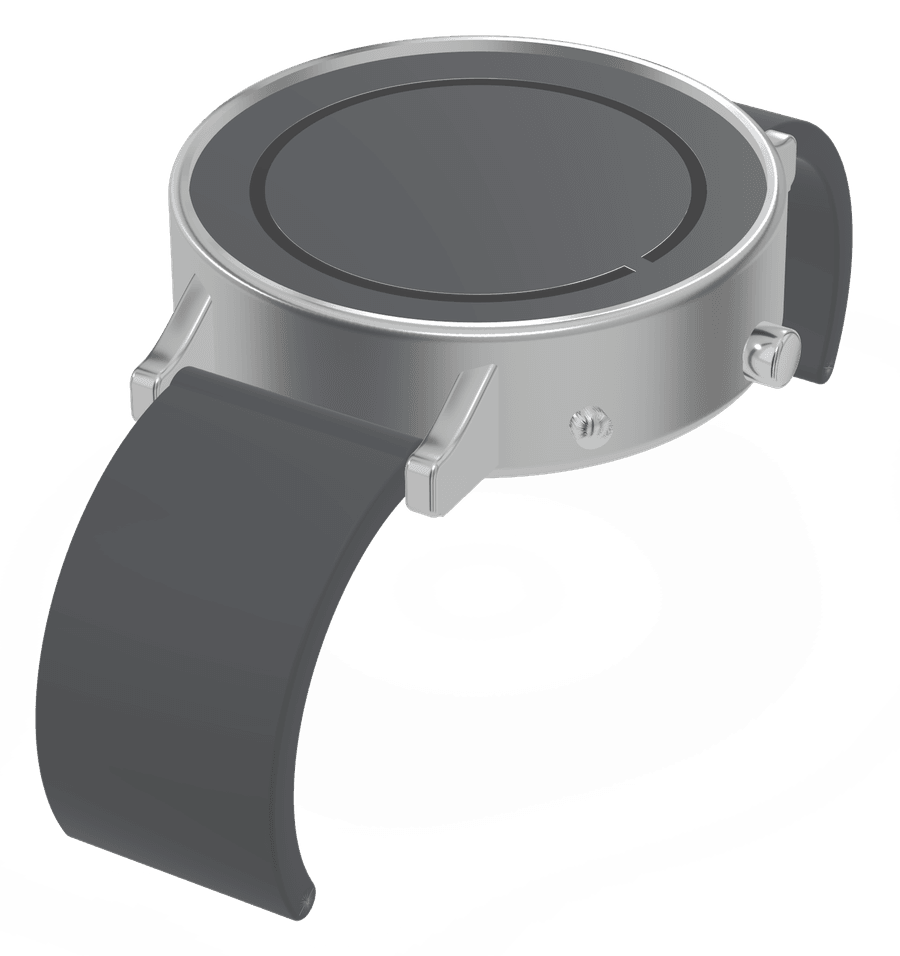
A ring-slot antenna in the top plate of a 45 mm metal smartwatch case, covering 2.4 GHz Wi-Fi and Bluetooth, with square-watch, fitness-band, and smart-ring variants.
The Challenge
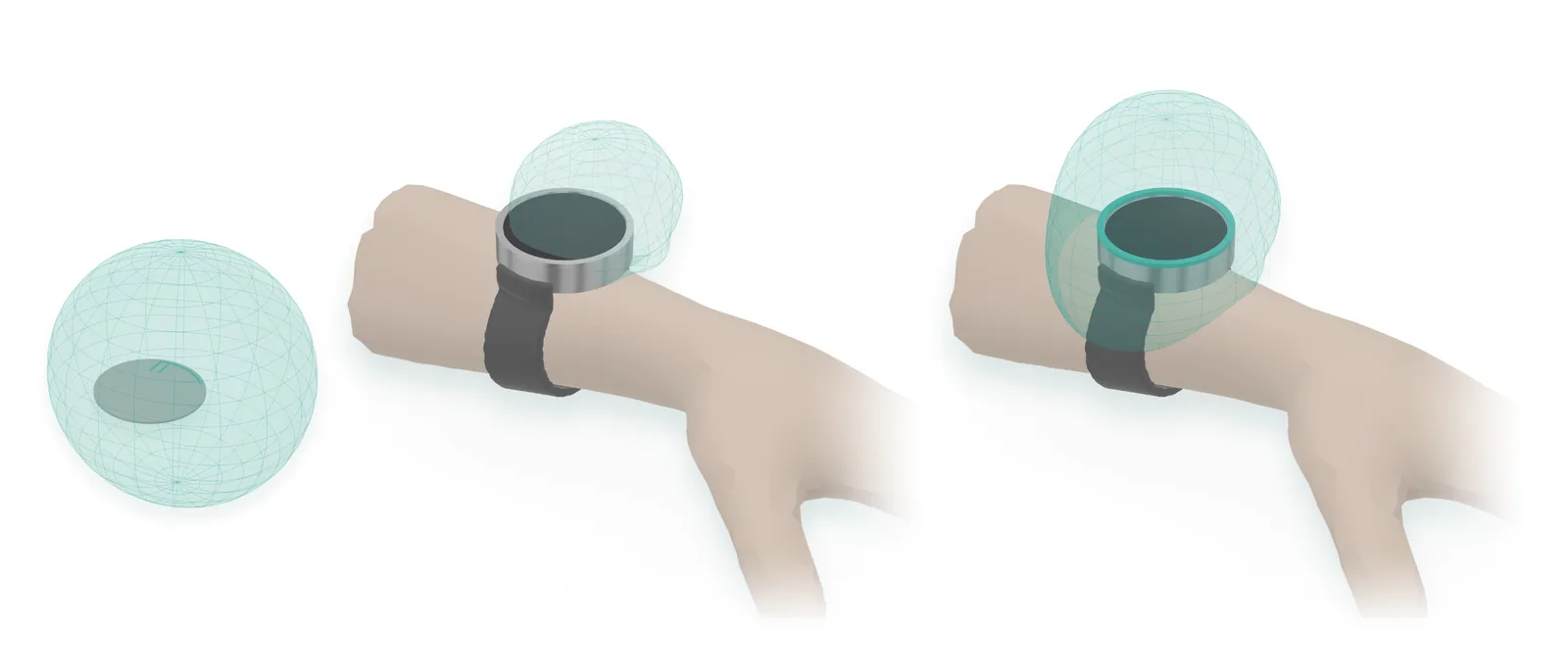
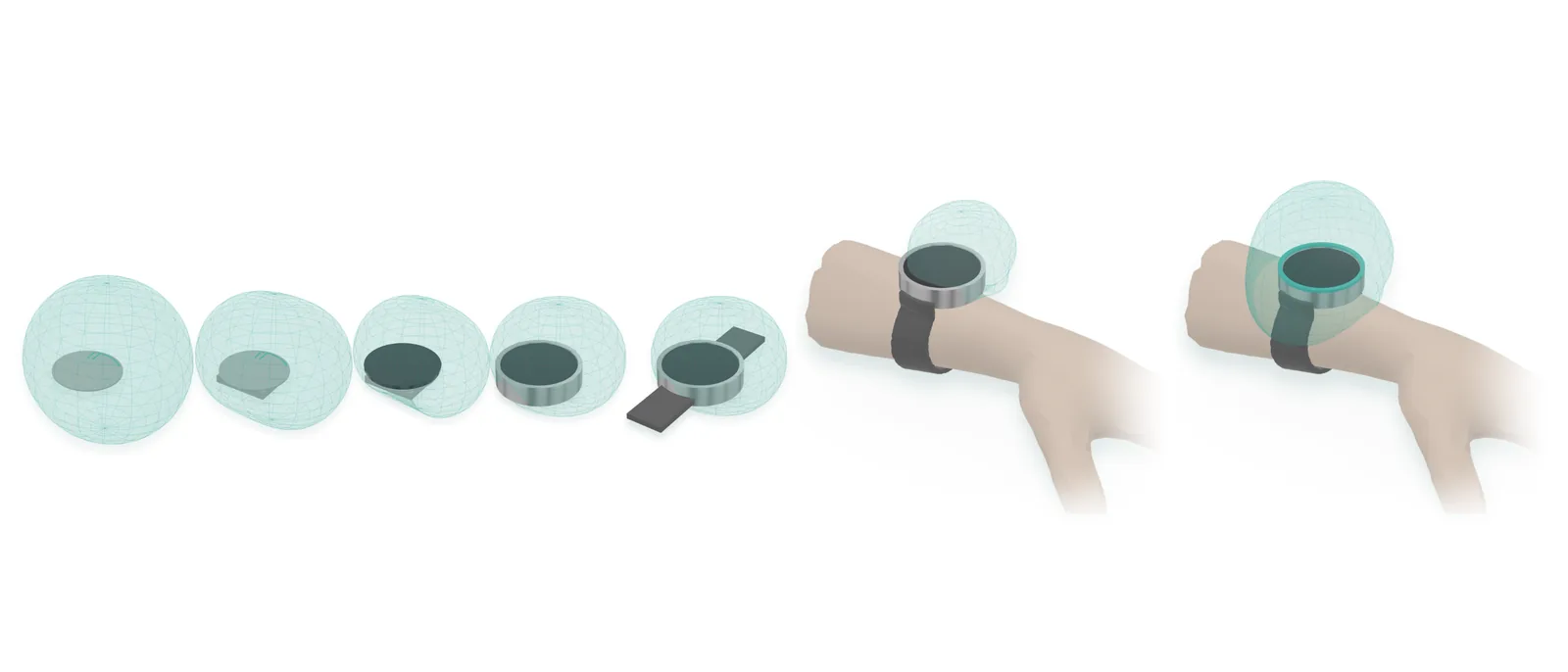
The battery, display, enclosure, and wrist affect antenna tuning. Wrist loading has the largest effect in this study; redesigning the metal bezel as the radiator restores performance.
Design Approach
A ring slot around the display allows the metal top plate to serve as the radiator. A feed strip beneath the plate and a shorting bridge excite the slot. The design includes the case, cover glass, battery, and PCB.
Results
Round watch, through the matching network
Round watch, gain at 2.44 GHz in two principal planes
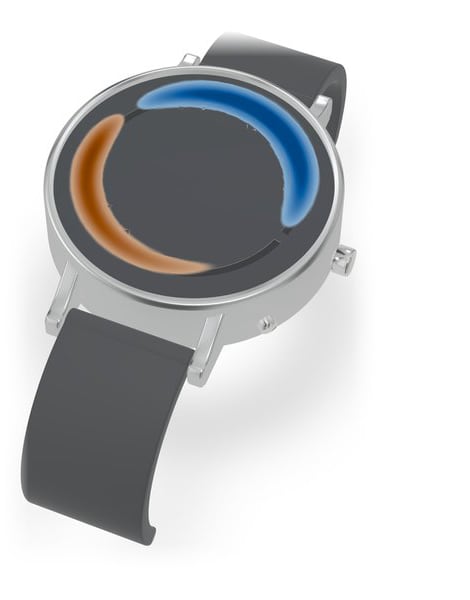
The ring slot covers 2400 to 2483.5 MHz with 18 dB matched return loss at the worst point in the band, exceeding the 10 dB requirement.
| Requirement | Specification | Design |
|---|---|---|
| Band | 2400–2483.5 MHz | Covered |
| Matched return loss, across the band | ≥ 10 dB | 18 dB |
Design Variants
Alternative designs for a square watch, fitness band, and smart ring are evaluated against the same 2.4 GHz specification.
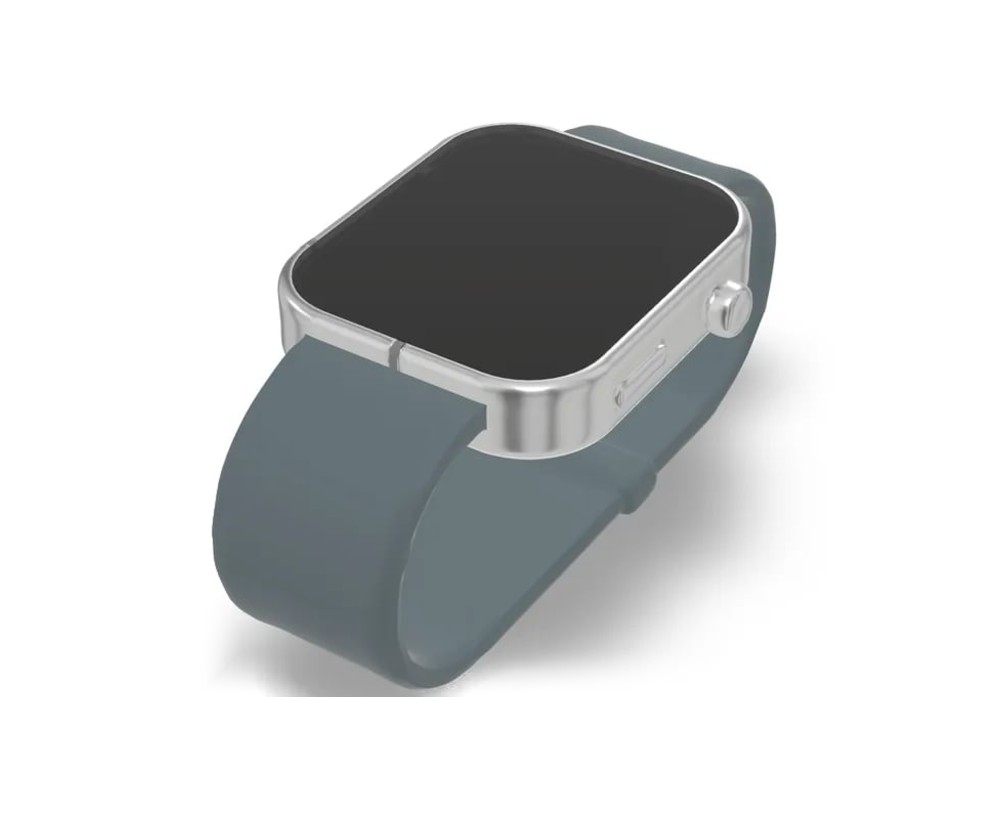
Two gaps and a shorting bridge to the display ground configure the 39 × 46 mm metal frame as the radiator.
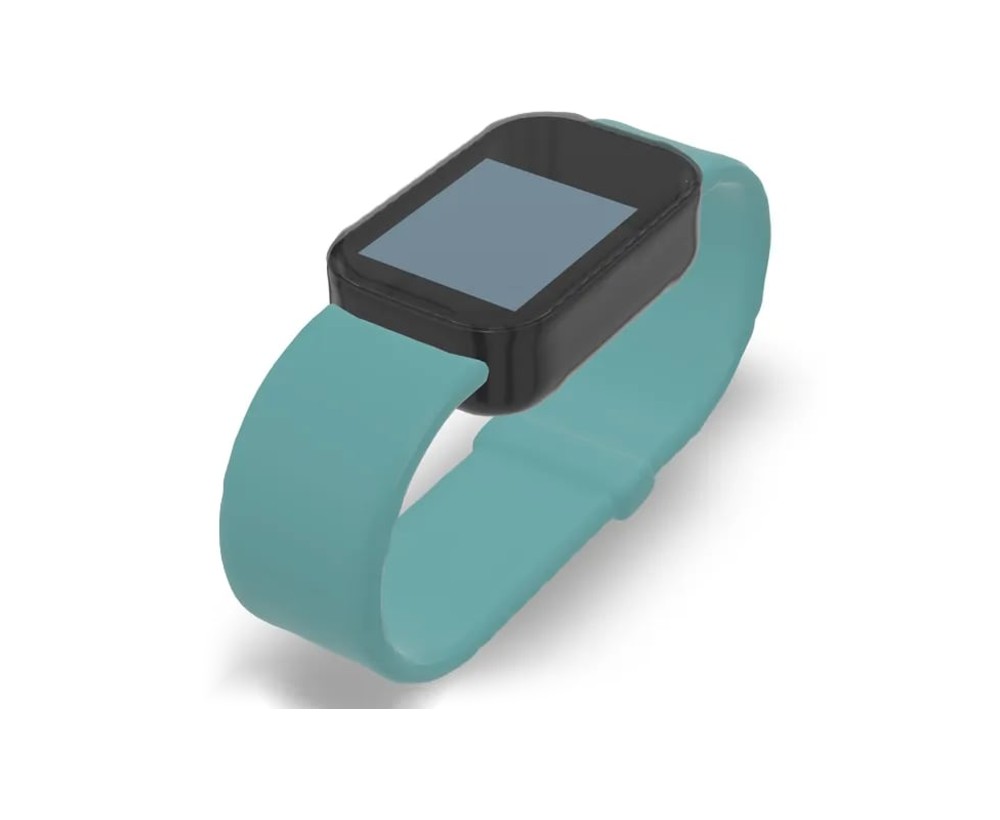
A printed inverted-F antenna occupies the PCB ground clearance within a plastic enclosure. It meets the specification with 8 mm clearance and a two-component matching network.
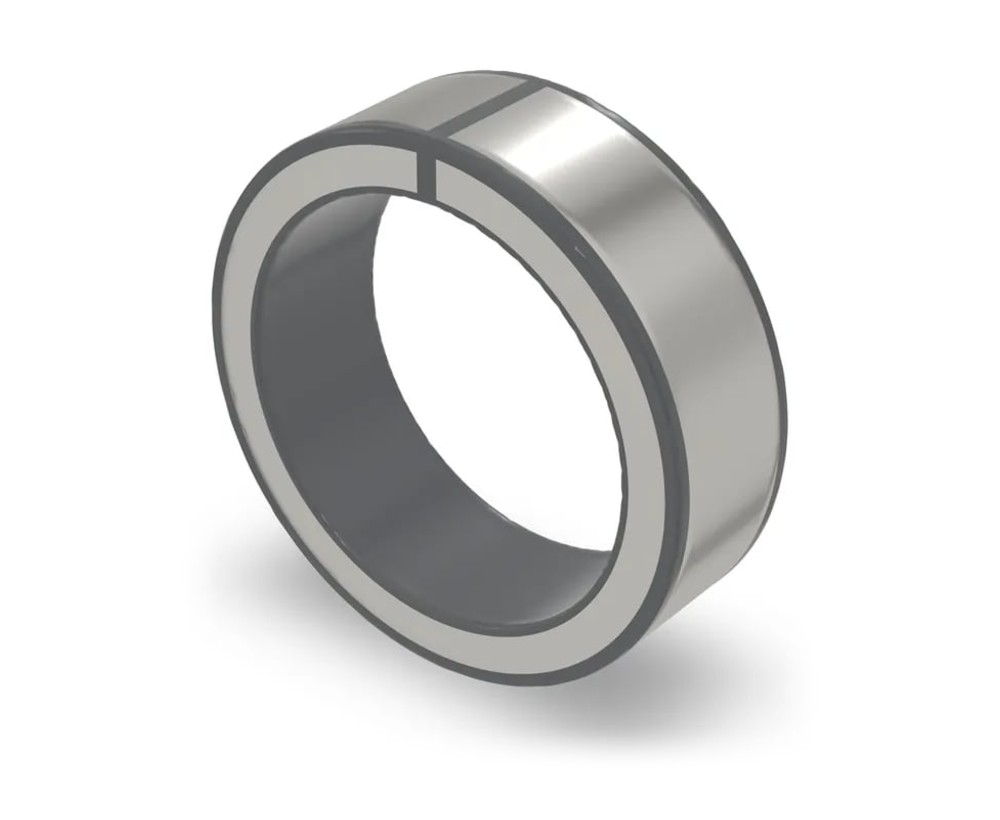
A split titanium shell is fed and shorted from the flexible PCB ground. Its high Q limits the bandwidth achievable with a two-component matching network, preventing coverage of the full 83.5 MHz band.
Gain at 2.44 GHz in the plane of the device
| Square watch | Specification | Design |
|---|---|---|
| Return loss in band, worst case with ±0.8 % detuning | ≥ 10 dB | 10 dB |
| Return loss in band, nominal | ≥ 10 dB | 13 dB |
| Peak gain, 2.44 GHz | – | 3.6 dBi |
| Realized gain, 2.44 GHz | – | 3.2 dBi |
Deliverables
Design alternatives with performance and integration trade-offs.
At the antenna port, bare and matched.
Case, top plate, slot, and feed.
Topology and component values.
Across the band.
Comparison of antenna topologies and rationale for design selection.
Contact an RF engineer to discuss your requirements and project scope.

 Dreamcatcher Labs